
Hedges are a simple, attractive way to create privacy, block an unwanted view, and form a living “green fence.” They soften hard lines in the landscape, reduce glare, and add year-round structure to Southern California yards.
Whether you need a tall, fast-growing wall to screen out a two-story neighbor or a lower, dense green border along a walkway, choosing the right plant type and understanding how hedges respond to pruning is essential for long-term success.
The Two Main Hedge Styles
1. Shrub Hedges
Shrub hedges consist of dense, compact shrubs that naturally branch well and can easily be shaped into a solid screen. They usually grow a bit slower than tree-type hedges, but they hold their fullness extremely well and often require less frequent pruning once established.
- Best For: Low-to-medium heights, clean borders, lower maintenance schedules.
- Popular Examples: Viburnum, Ligustrum (Privet).
2. Tree-Type Hedges
Some tree species respond remarkably well to regular topping and shearing (while topping is a “no” for many traditional trees, certain hedge-suitable species are specifically grown and maintained this way). When managed correctly, they push vigorous new growth right below the cut and develop a thick, seamless wall of foliage.
Tree-type hedges generally grow much faster and taller than shrub hedges—a huge advantage if you need high privacy quickly. The tradeoff is maintenance: they require more frequent trimming, and if topping is skipped for too long, they can become top-heavy or leggy near the bottom.
- Best For: High privacy screens (10–20+ feet), blocking multi-story views, fast growth.
- Popular Examples: Ficus Nitida, Podocarpus, Eugenia, Carolina Cherry, Italian Cypress.
Popular Privacy Hedge Varieties for Southern California
Ficus Nitida (Indian Laurel Fig)
Ficus nitida is the gold standard for rapid, ultra-dense privacy screens in SoCal. It can be sheared into a formal, perfectly flat “green wall” that effectively blocks out multi-story neighbors or noisy street traffic.

Podocarpus (Fern Pine: Gracilior & Henkelii)
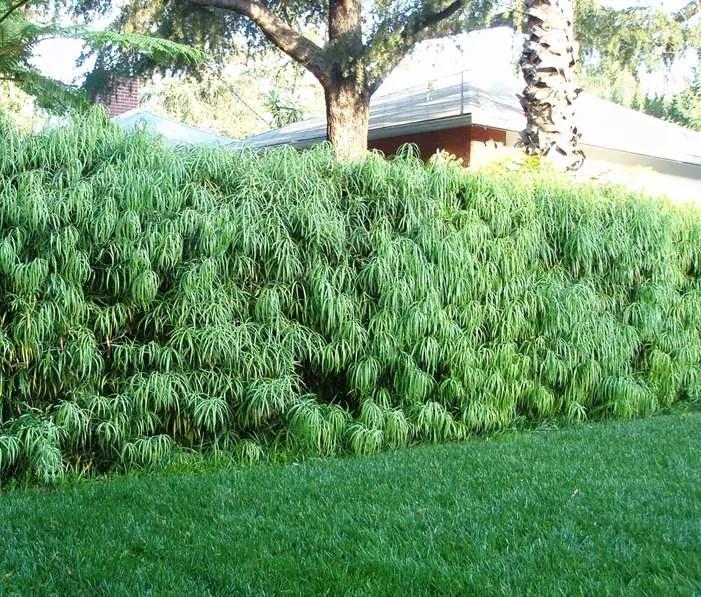
Podocarpus is an exceptionally versatile, clean evergreen with soft, willow-like foliage. Podocarpus gracilior features fine, airy leaves, while Podocarpus henkelii offers broader, long drooping needles. Both varieties form elegant, low-mess hedges that thrive in sun or partial shade with non-invasive root habits.

Eugenia (Brush Cherry)
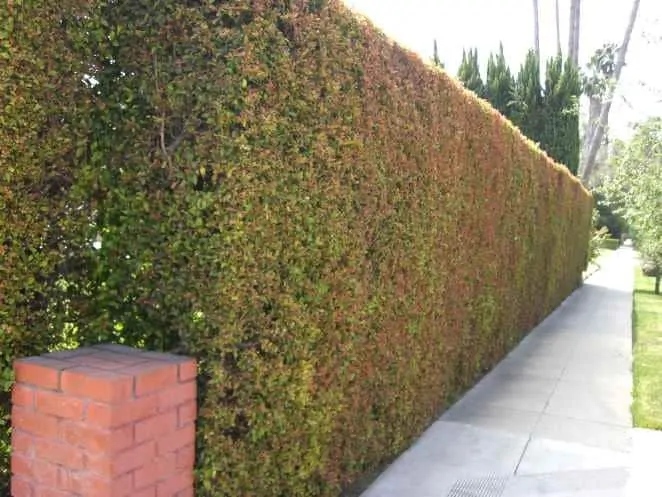
Eugenia is a fast-growing staple known for its glossy green leaves and vibrant reddish-bronze new growth tips. It takes formal box-shearing effortlessly and creates a tight, highly structured border.
Carolina Cherry (Prunus caroliniana)
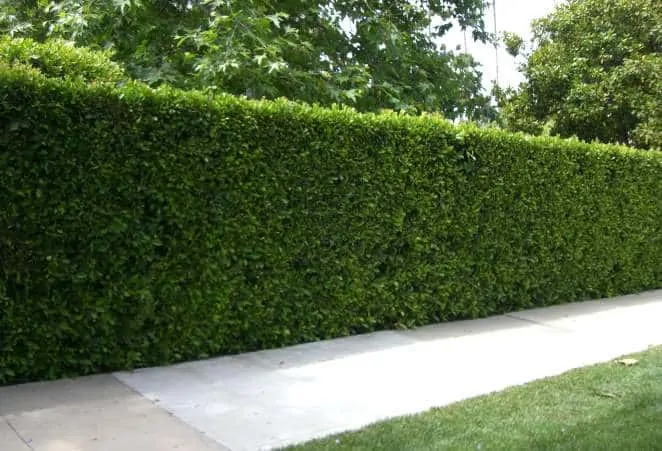
Carolina Laurel Cherry is a tough, drought-tolerant native-hybrid favorite featuring shiny, dark green leaves and a naturally upright growth habit. It forms a thick, handsome screen that handles inland heat and drought with ease.

Italian Cypress (Cupressus sempervirens)
For tight side yards or narrow property boundaries where wide branching isn’t an option, Italian Cypress provides dramatic vertical height. Its naturally columnar, pencil-thin habit screens out tall neighboring structures without invading valuable yard space.

Ligustrum (Privet)
Privet is a classic shrub-type hedge species prized for its hardiness, rapid recovery after pruning, and adaptability to almost any soil type. It can be kept tightly trimmed or allowed to grow naturally with fragrant spring blooms.
Viburnum
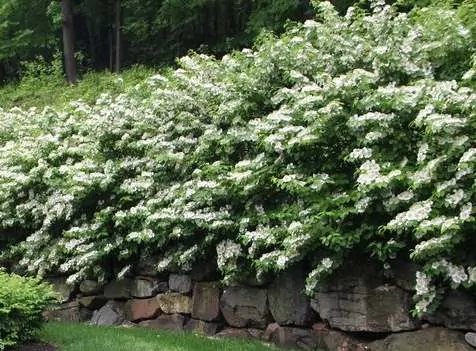
Viburnum features broad, leathery dark-green leaves that offer a softer, more natural look than formal box hedges. It grows as a dense, manageable shrub hedge that holds its fullness down to ground level.
Pruning Principles: How to Keep Your Hedge Full
A key principle of plant response is simple: when you prune in one place, the plant responds by growing somewhere else.
- Topping the Top: Trimming the leader stems encourages the hedge to send out new lateral shoots below the cut, keeping the growth dense and compact rather than thin and tall.
- Trimming the Sides: Shearing the sides stimulates inner branching, creating that solid “green wall” texture.
The Golden Rule of Trimming: Always keep the top of your hedge slightly narrower than the bottom (an inverted ‘A’ shape). This ensures sunlight reaches the lower branches so the bottom of your hedge stays full and lush, rather than going bare and leggy over time.
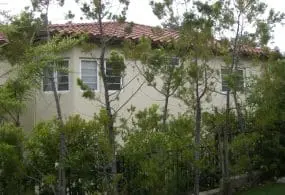
With the right plant selection for your microclimate and a consistent shearing schedule, your living green fence will remain thick, healthy, and effective for years to come.
Hedge Species Quick Comparison
| Species | Hedge Style | Growth Rate | Best Feature |
|---|---|---|---|
| Ficus Nitida | Tree-Type | Fast | Ultra-dense, seamless formal wall |
| Podocarpus | Tree-Type / Shrub | Moderate | Clean root system, soft texture, low mess |
| Eugenia | Tree-Type | Fast | Vibrant reddish new foliage, takes precise shaping |
| Carolina Cherry | Tree-Type | Moderate to Fast | Heat & drought tolerant with glossy foliage |
| Italian Cypress | Tree-Type (Columnar) | Fast | Ultra-narrow vertical footprint for tight spaces |
| Ligustrum (Privet) | Shrub | Fast | Extremely resilient, classic formal boundary |
| Viburnum | Shrub | Moderate | Broad, attractive leaves; stays full to the ground |